Crazy Time RTP — What 96.08% Means for Your Real Sessions and Why Volatility Matters More
Every guide mentions the number. Crazy Time has a 96.08% RTP. But almost nobody explains what that number actually does — and doesn't — tell you about a Wednesday night session with €50 on the table. This article unpacks the maths behind Evolution Gaming's live game show: how RTP works over different horizons, why high volatility makes short sessions wildly unpredictable, and what the house edge actually costs you. If you need the game basics first, the How to Play page covers the rules.
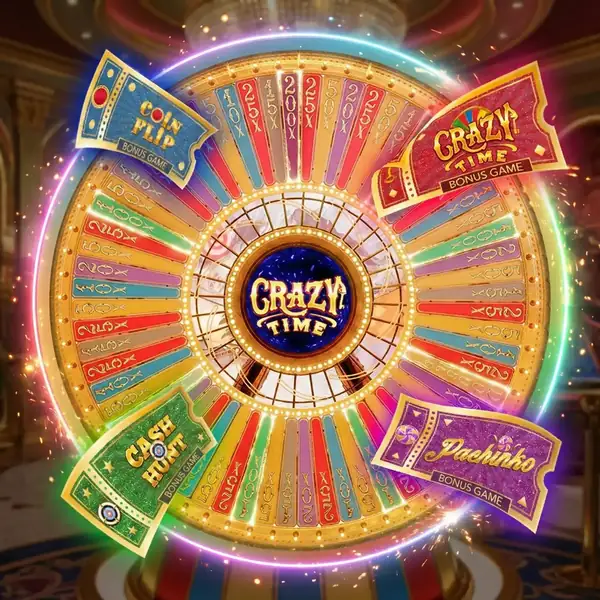
What 96.08% RTP Actually Means
Return to Player is a theoretical figure calculated across millions of spins. For every €100 wagered across that enormous sample, the game returns €96.08 and the house keeps €3.92. That 3.92% house edge is competitive — many live games sit at 4–6%. But RTP is a long-run promise, not a session guarantee.
| Time Horizon | RTP (Theory) | Realistic Return Range | Your Control |
|---|---|---|---|
| 10 rounds | 96.08% | 0% – 800%+ | Almost none |
| 100 rounds | 96.08% | 40% – 300% | Minimal |
| 1,000 rounds | 96.08% | 80% – 115% | Moderate |
| 100,000 rounds | 96.08% | 95% – 97% | ≈ Theory |
On a 100-round session, Player A might return 40% (losing €60 of a €100 bankroll) while Player B returns 300% (tripling their money). Both results are mathematically normal under high volatility. The 96.08% only converges across tens of thousands of rounds.
Crazy Time Volatility — Why It's Rated 4 Out of 5
Volatility describes how results cluster. Low volatility means frequent small returns. High volatility means long dry stretches interrupted by large spikes. Crazy Time sits at 4/5 on Evolution's volatility scale — firmly in high territory.
In practical terms: you can easily go 8–12 rounds without winning anything meaningful, then hit a single Crazy Time bonus round that returns 500× your bet in under a minute. The base wheel numbers (1, 2, 5, 10) provide a stream of small returns that keeps your balance from falling off a cliff, but the session-defining moments come from bonus rounds — especially Cash Hunt and the Crazy Time bonus itself.
RTP by Bet Type — Not All Segments Are Equal
The 96.08% is an aggregate. Individual bet types carry slightly different theoretical returns:
| Bet Type | Segments | Approximate RTP |
|---|---|---|
| Number 1 | 21/54 | ~96.15% |
| Number 2 | 13/54 | ~95.95% |
| Number 5 | 7/54 | ~95.78% |
| Number 10 | 4/54 | ~95.73% |
| Coin Flip | 4/54 | ~95.70% |
| Cash Hunt | 2/54 | ~95.27% |
| Pachinko | 2/54 | ~94.33% |
| Crazy Time Bonus | 1/54 | ~94.41% |
Number 1 has the highest individual RTP because it appears most often. Bonus bets have lower RTP but dramatically higher variance — and that's where the massive payouts come from. You're trading expected return for upside potential. The statistics page tracks actual distribution across recent spins.
What the House Edge Costs You Per Hour
Crazy Time runs approximately 50–55 rounds per hour. At €1 per bet across one segment, you're wagering roughly €50–€55/hour. The 3.92% house edge means an expected cost of about €2 per hour at that stake level. At €10 per round, the expected cost rises to €20/hour.
This is the true cost of entertainment — not the dramatic loss or win you see in one session, but the steady mathematical drain across time. Bankroll management controls how long you can play before that drain forces you out. The strategy guide covers session budgeting in detail.
The Takeaway
RTP tells you the game is fair. Volatility tells you any single session will feel unfair. Your job is not to beat the maths — it's to manage your exposure so the variance works for you instead of against you. Try it risk-free in the demo before playing with real money, and always check the live tracker to see recent results before jumping in.
18+. Gambling involves risk. RTP is a theoretical long-run figure and does not predict session results. If gambling is becoming a problem, visit GamblingTherapy.org.